
How to Wear an Insulin Pump: A Practical Guide for Kids and Adults
Getting your first insulin pump often brings up a very simple question: Where should I put it? In a pocket, a pump belt, a pouch, or under clothing? What about sleeping, sports, or a young child?
There is no single right answer. It depends on your pump model, age, clothing, activities, and how often you need to access your pump. Let's explore the options and find what works for you.

What do you need help with?
Jump straight to the situation that matters to you.
What are the ways to wear an insulin pump?
There are surprisingly many ways to carry a traditional tubed insulin pump. No single option suits everyone, and you do not have to use the same method all day.
How do you choose what works for you?
New to insulin pumps? Here's where I would start
When parents ask what to try after their child gets their first insulin pump, I usually suggest starting with a pull-on insulin pump belt.
There is a practical reason for this. The pump can stay close to the body during the day, and the same type of belt can also be used for sleeping, depending on personal preferences. You do not have to find a separate product for every situation right away.
You do not need to find one product that will be perfect for everything, forever.
Insulin pump belts: why does the right size matter?
People of the same age or clothing size do not necessarily have the same body circumference. That is why I make Miolka belts to order, based on the measurement you provide and how the belt will be used.
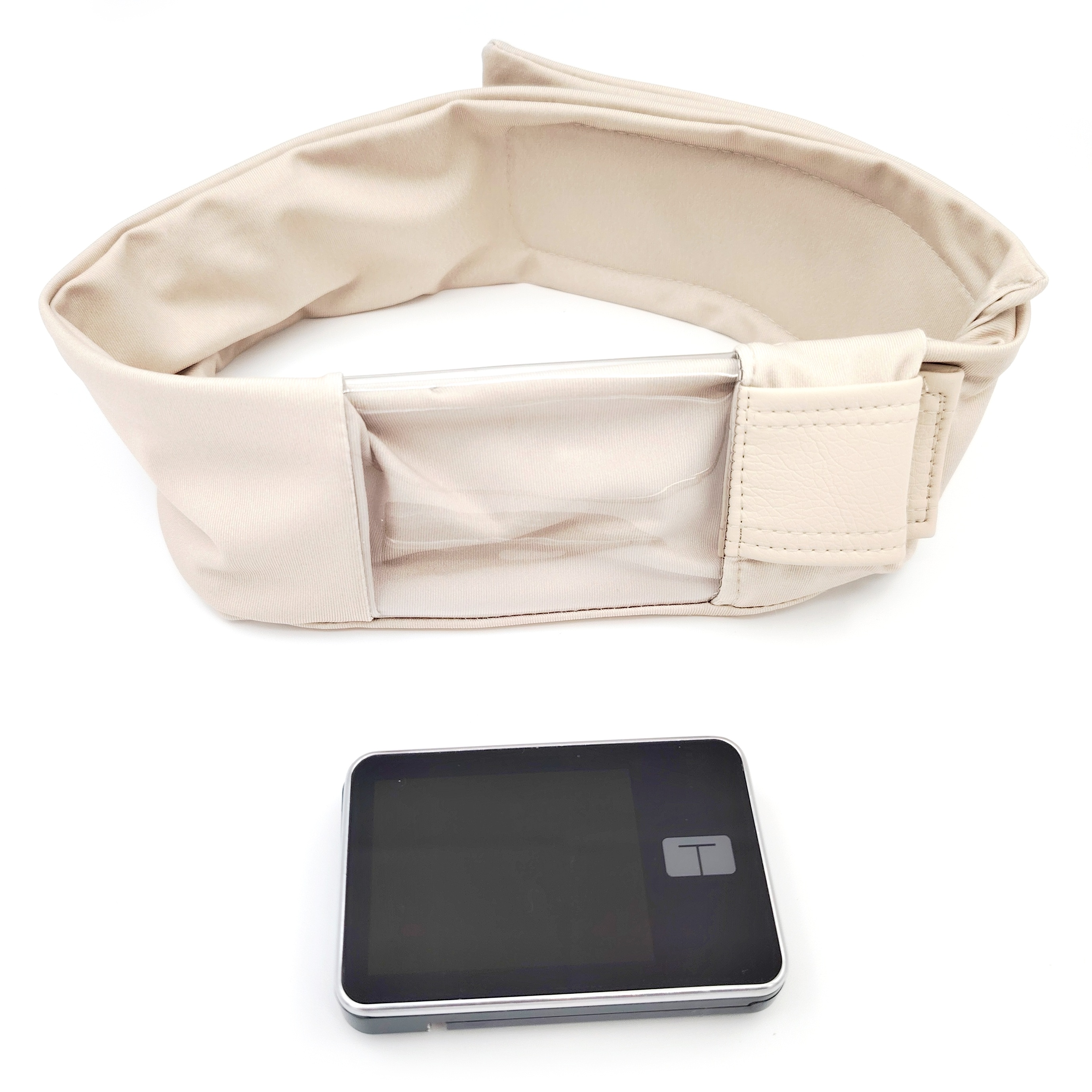
Depending on the available options, you can choose a pull-on belt or a hook-and-loop fastening, a version with or without a clear window, or a belt designed to hold both a pump and a phone.
Should you choose a belt with or without a clear window?
👀 Belt with a clear window
Useful when you want to see the pump screen or operate the pump without taking it completely out of its pocket.
🤍 Belt without a window
This may suit someone who rarely needs to operate the pump directly, or whose system allows much of the control to take place through a compatible phone.
However, it is not possible to say that a particular pump model always requires a belt with or without a window. What matters is your particular pump and how you use it.
What about insulin pump tubing?
Tubing is often the source of practical questions when you first start using a pump. Where should it go? Will it get in the way? Does the belt need an extra hole?

How do you sleep with an insulin pump?
The first night with a pump can bring another question: Where should I put it so I don't have to think about it all night?
People use different methods, such as a pyjama pocket, a clip, or a soft belt. It depends on the specific pump and how much you move in your sleep.
Always follow the instructions and recommended use for your specific pump.
How to wear an insulin pump during sports and exercise
When it comes to sport, it helps to separate two different questions:
How should I carry the pump?
During everyday movement, it may help to keep the pump from bouncing around while choosing a solution suited to the activity.
Should the pump remain connected during activity?
That depends on the specific pump, the activity, and the person's individual diabetes care plan. There is no universal answer.
A belt does not change an insulin pump's water resistance or durability. For swimming, showering, contact sports, and similar activities, always follow the pump manufacturer's instructions and your diabetes care team's advice.
Can an insulin pump be hidden under clothing?
But it doesn't have to be hidden.
Some people prefer their pump to be almost invisible. Others do not mind if people can see it. Both choices are fine.
Trousers and jeans
A pocket, clip, separate pouch, or belt worn under clothes can all be simple options.
Leggings and fitted clothing
If your clothes do not have a suitable pocket, a stretchy belt may be one option.
Dresses and skirts
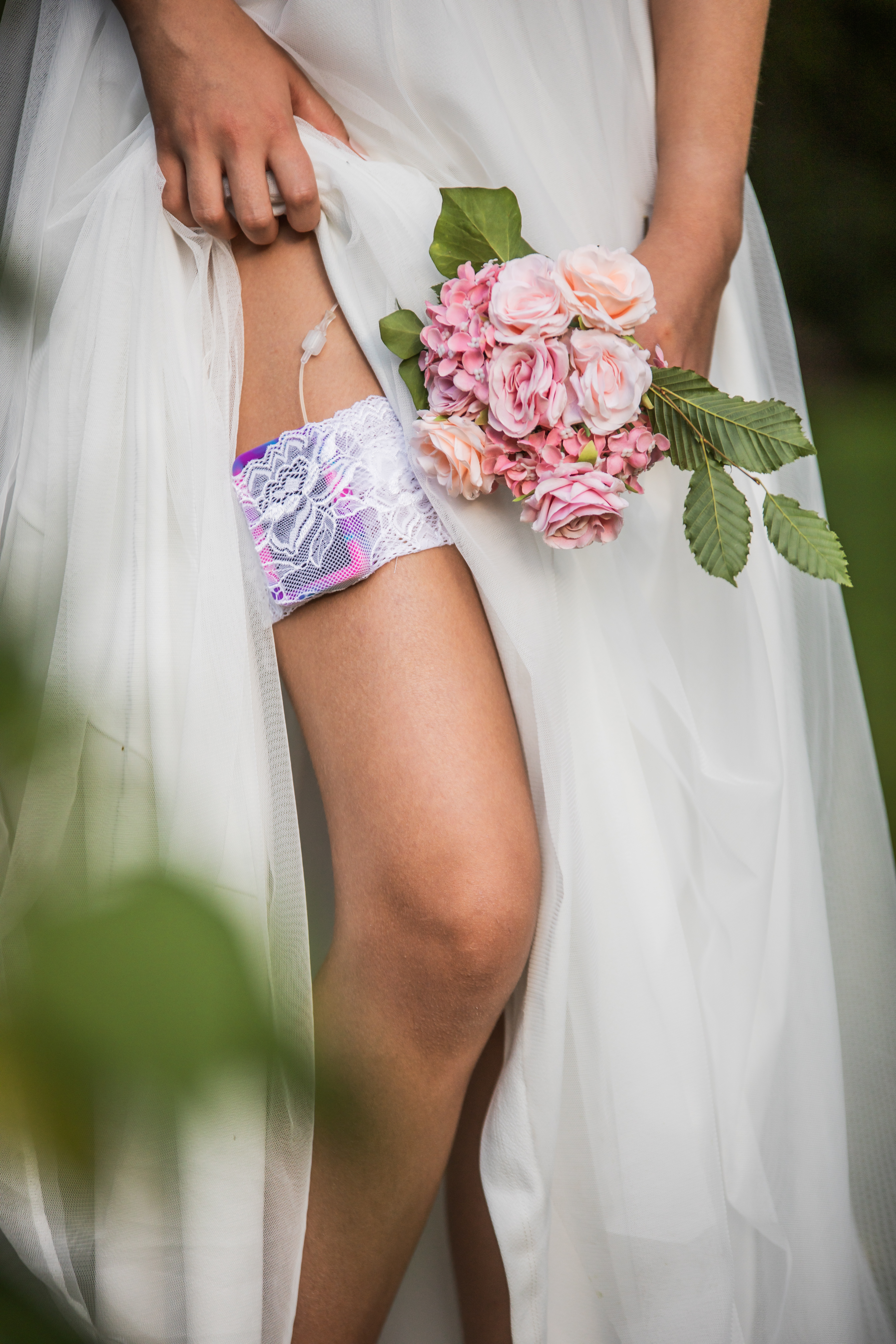
Depending on the cut of your clothes and how often you need access to the pump, you could use a belt, a suitable pocket, or a thigh band.
How can a child wear an insulin pump?
With a child, I would not start by asking: “Where can we hide the pump?”
It is much more useful to think about their actual day. Children run, sit on the floor, change clothes, use the toilet, sleep, jump, and play.
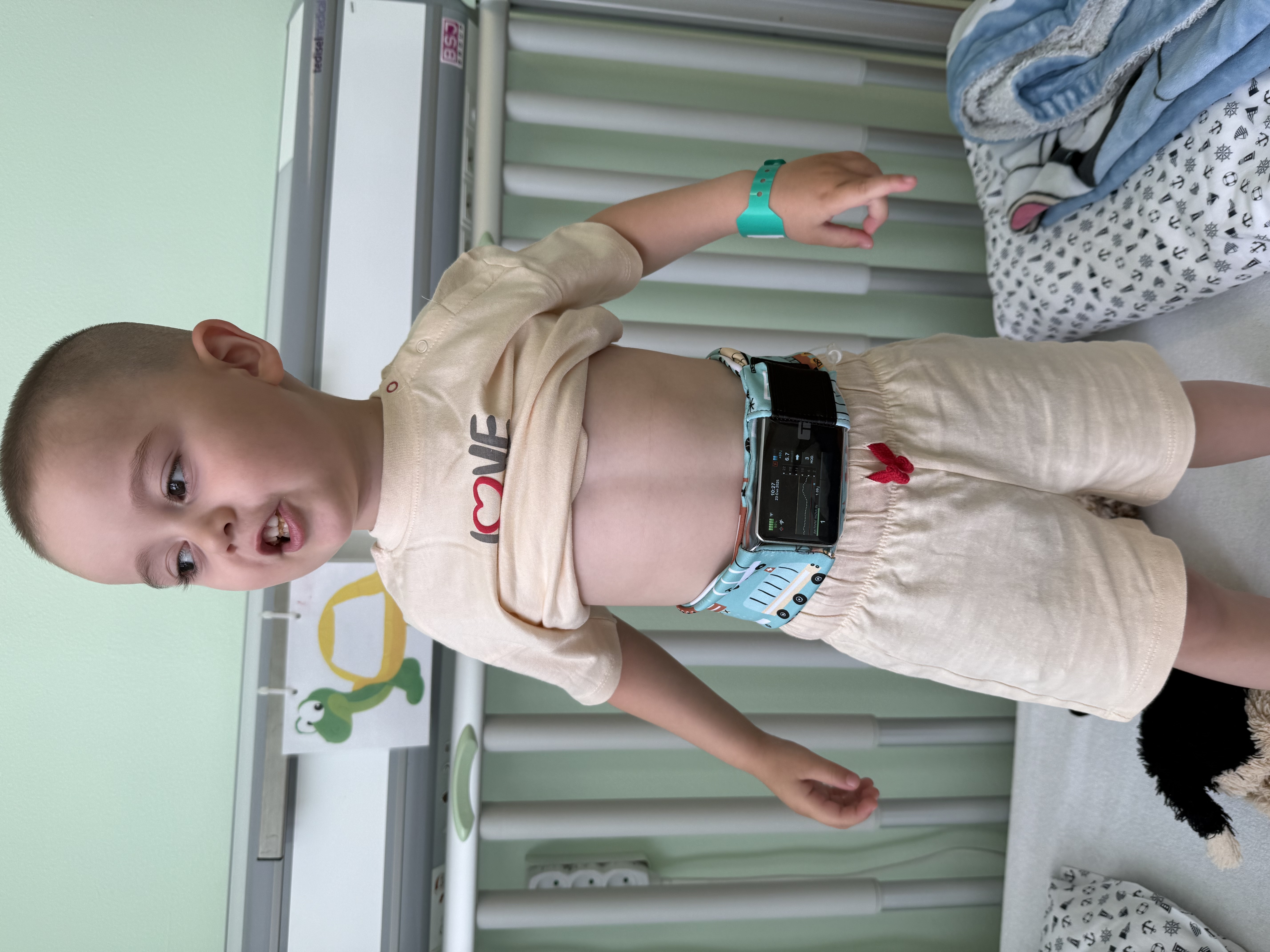
That is why a pull-on belt can be a good first choice for younger children. Over time, however, they may discover that different ways of carrying their pump work better in different situations.
When your child needs to carry both a pump and a phone
With CGM and modern diabetes management systems, children often need to carry more than just their insulin pump. They may also need a phone or another compatible device.
There are several options. For example, a child could keep their phone in a small backpack and their pump in a belt. At Miolka, I also make belts with separate compartments for an insulin pump and a phone.
The most practical option depends on the child's age, independence, system, and what feels comfortable during everyday activities.
.png)
Let your child have a say, too
Adults often focus on functionality. Children may have another very simple question: “Do I like it?”
That is why I believe it is worth letting children choose the colour or pattern of their accessories whenever possible.
Some children love bold prints, others prefer delicate patterns, and teenagers may gradually want something much more understated. Diabetes brings many things into a child's life that they did not choose. The appearance of an accessory can be one thing they do get to decide.
🎒 What about an insulin pump at school?
Wearing a pump comfortably is only one part of the school day. Parents and schools also need to know how to handle everyday situations related to type 1 diabetes.
That is why I created Miolka EDU – easy-to-understand resources for parents, teachers, and schools.
How to wear different insulin pump models
Pump sizes, controls, and available accessories vary by model. When choosing a belt or pouch, it is important to consider the specific pump and how it is used.
Tandem t:slim X2
The t:slim X2 is one of the pumps I regularly make belts and pouches for at Miolka.
Because it has its own touchscreen, a belt with a clear window can be practical if you want to see the display without removing the pump.
Other users may prefer a belt without a window or a separate pouch.
Tandem Mobi
The Tandem Mobi is a much smaller pump. The manufacturer designed it to be worn in several ways: on the body in a designated sleeve, clipped to clothing, or carried in a small pocket.
At Miolka, I am preparing for the Mobi's arrival. I plan to use a 3D-printed model matching the pump's dimensions when developing belts and pouches.
Once the products have been tested, I will add the specific options here.
MiniMed 780G
The MiniMed 780G can also be worn in different ways. The manufacturer offers its own pump clip and other accessories, for example.
With this pump, it is important to remember that the mobile app provides a secondary view of the data; it is not a universal replacement for the pump's main display.
Miolka offers a choice of suitable belts or pouches depending on your preferences.
mylife YpsoPump
The YpsoPump is a good example of a pump that can be carried in more than one way. Its manufacturer also offers different clips and pouches.
At Miolka, you can choose a solution based on how you use the pump and how often you need to access it.
Accu-Chek Insight
I regularly make suitable belts and pouches for the Accu-Chek Insight at Miolka.
As with other pumps, your choice depends on how you need to access the pump, how you wear it, and whether you use an additional case.
DANA
For DANA pumps, Miolka can also make a belt or pouch to suit the specific model.
Please specify the exact pump model when ordering.
Have a different insulin pump?
Miolka's options do not end with the models listed above.
If you use another model, send me its exact name and model. If I do not yet have a sewing pattern for it, we can look at its precise dimensions and assess whether a suitable product can be made.
The ability to adapt an accessory to a particular person and pump is one of the things I want Miolka to stand for.
What if my pump has a silicone case or clip?
This is a detail that can easily be overlooked when ordering.
A silicone case or clip changes the pump's external dimensions. If you are choosing a close-fitting pouch or an accessory designed for a specific model, please mention this when ordering.
That way, we can take into account the actual dimensions of the pump as you wear it.
Miolka did not begin as a random sewing project. It grew out of personal, close-up experience of everyday life with type 1 diabetes.
Since 2019, I have made a wide range of belts and pouches and worked with individual customer requests, from very young children to adults.
My customers have gradually taught me just how many different needs can lie behind one simple sentence:
“I need something for my pump.”
That is why I do not claim there is one solution for everyone. I want to help people find something that makes sense for their own lives.
What do Miolka customers say?
Great belt. This is already the second one we've bought from you. It is such a big help for our five-year-old son.
I was particularly impressed by how comfortable the material feels. You can tell the maker has experience.
Customer reviews translated from Czech.
Frequently asked questions about wearing an insulin pump
What is the best way to wear an insulin pump?
There is no single best way. It depends on the pump, age, clothing, activities, and personal preferences.
Is a belt with a clear window better than one without?
A window is useful if you want to see or operate the pump screen without removing the pump. If you rarely need to operate it directly, you may prefer a simpler belt without a window.
How do you sleep with an insulin pump?
There are several options, including a pyjama pocket, a clip, or a soft belt. At Miolka, I often recommend trying a pull-on belt as one of the first options.
How do you wear an insulin pump under a dress?
Depending on the dress, you could use a belt, a suitable pocket, or a thigh band. Also consider how easily you will need to access your pump.
How should a young child wear an insulin pump?
I often recommend trying a pull-on belt first. Every child has different preferences, though, and may eventually use several different carrying options.
What if my child needs both a pump and a phone?
One option is to keep the pump in a belt and the phone in a small backpack. Miolka also offers belts with separate compartments for the pump and phone.
What if Miolka does not list my pump model?
Get in touch and tell me the exact model. If I do not have a pattern for it yet, we can look at the precise measurements and see whether a suitable product can be made.
Can I wear a pump belt while swimming?
A belt does not make your insulin pump waterproof. For swimming and water activities, follow the pump manufacturer's instructions and your diabetes care team's advice.
What about contact sports?
If there is a risk of a hard impact, damage to the pump, or injury to someone else, I would not automatically recommend wearing the pump in a regular belt. Follow the manufacturer's guidance and your individual diabetes care plan.
What if my pump is in a silicone case or has a clip?
Mention it when ordering. A case or clip can change the pump's external dimensions and therefore the pouch or pocket size you need.
School in the morning. The playground in the afternoon. Dressing up in the evening. Bedtime at night.
The insulin pump stays the same, but your activities change throughout the day.
That is why one perfect belt, pouch, or pocket may not work for every situation. It is often more practical to discover what suits you at different times.
Find your own way to wear your pump
At Miolka, you will find different options for children and adults, from made-to-measure belts and pouches to small backpacks, waist bags, and discreet accessories worn under clothing.
Updated: August 2026.